How to Cigar
Twenty plates for the curious smoker.
From your first cigar to your first humidor — each guide explains what to do, step by step, and why it matters.
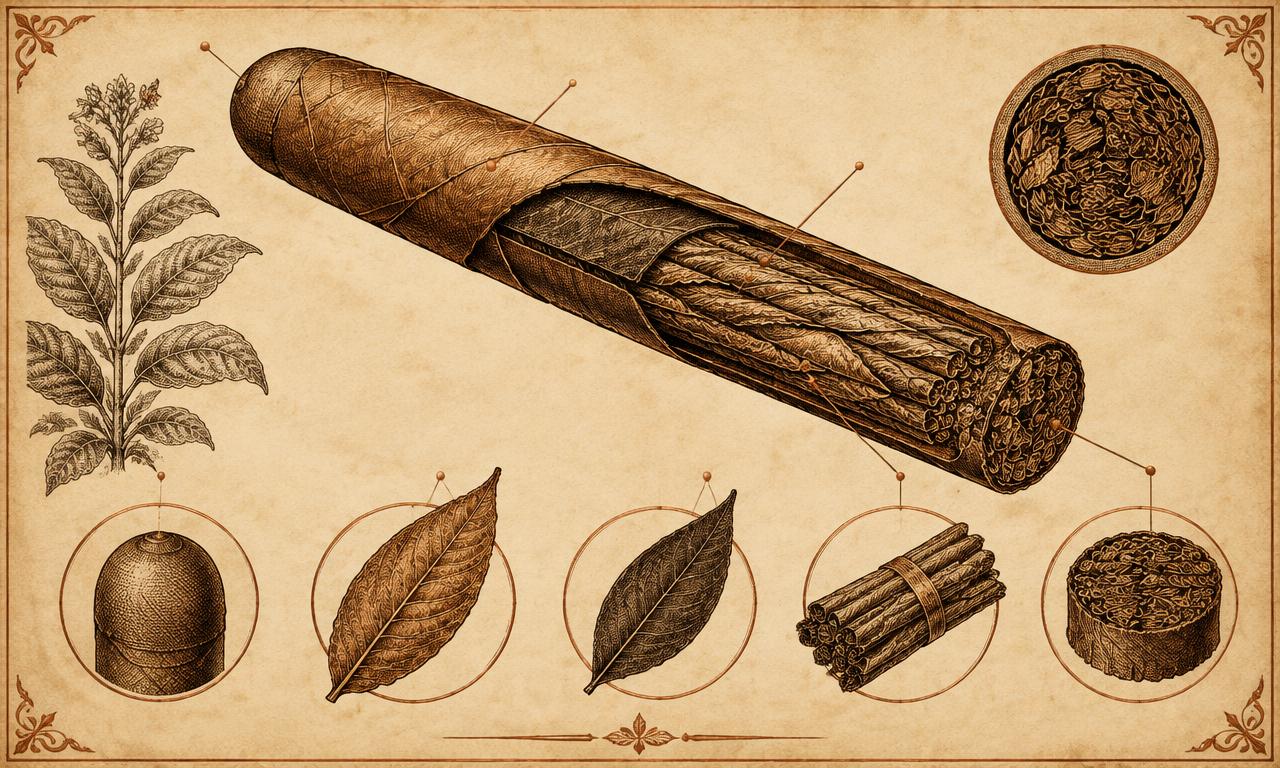 Plate 01
No. 01
Know the parts of a cigar
Why: Every step below makes more sense once you know what you're cutting and lighting.
- 1The wrapper is the outer leaf — it carries much of the flavor and looks.
- 2The binder holds the filler together underneath.
- 3The filler is the bundle of leaves in the middle that does most of the burning.
- 4The cap seals the head (the end you smoke); the foot is the open end you light.
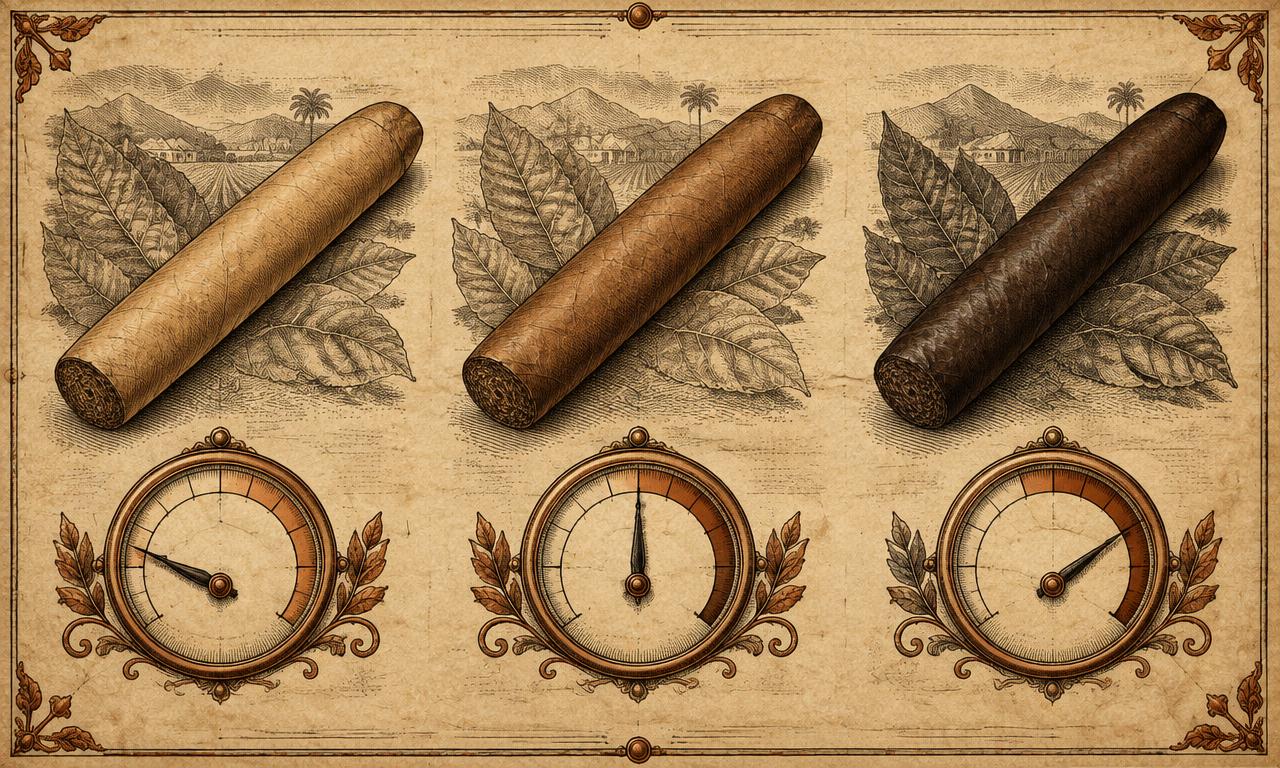 Plate 02
No. 02
Choose your first cigar
Why: Starting too strong is the most common way people decide they "don't like cigars."
- 1Ask for something mild or mild-to-medium.
- 2Pick a medium size you can finish in about 45 minutes.
- 3Don't judge by color alone — a dark wrapper isn't always stronger.
- 4Tell the shop what you like to drink; it's a great flavor clue.
No one at a good lounge will judge you for asking. Everyone started somewhere.
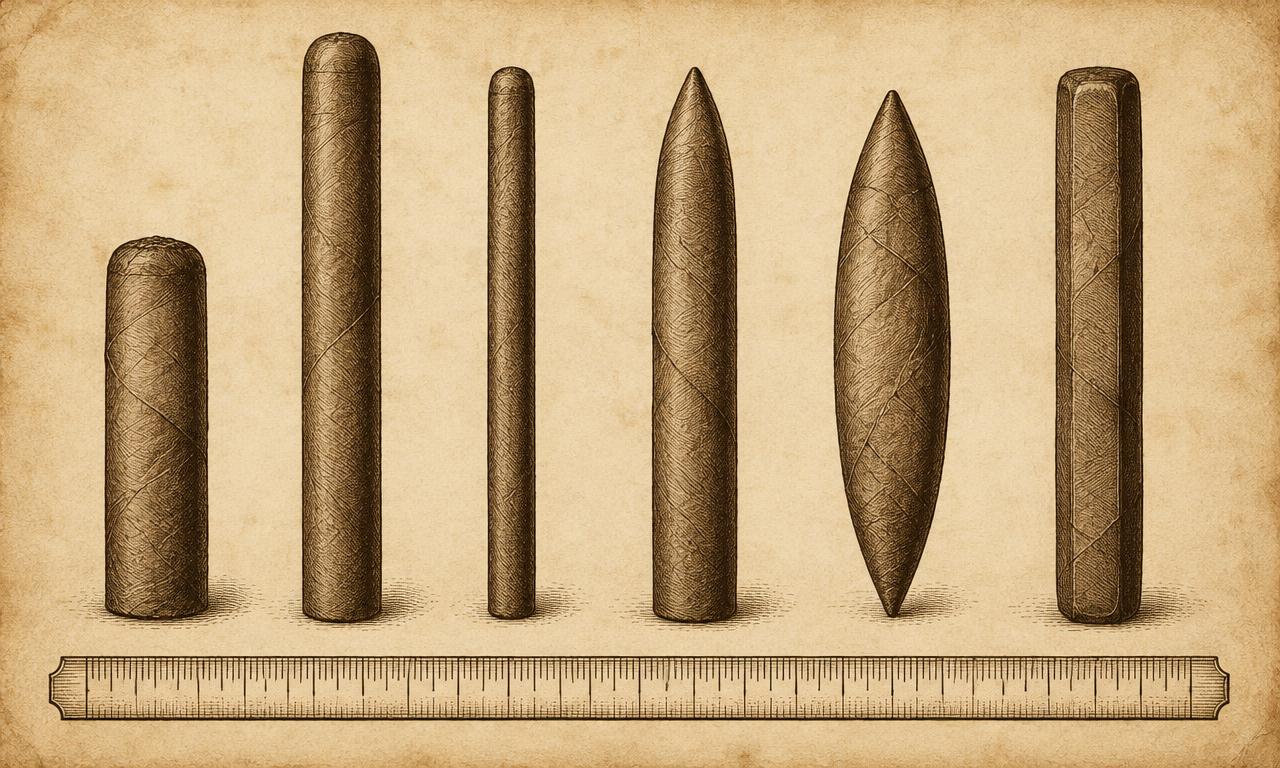 Plate 03
No. 03
Understand sizes and shapes
Why: Size changes how long you'll smoke, how hot it burns, and how flavors come through.
- 1Length is measured in inches; thickness (ring gauge) in 64ths of an inch.
- 2Robusto: short and thick, about 45–60 minutes.
- 3Churchill and Toro: longer sessions, 75–90 minutes.
- 4Torpedo and Perfecto have pointed ends that focus the smoke.
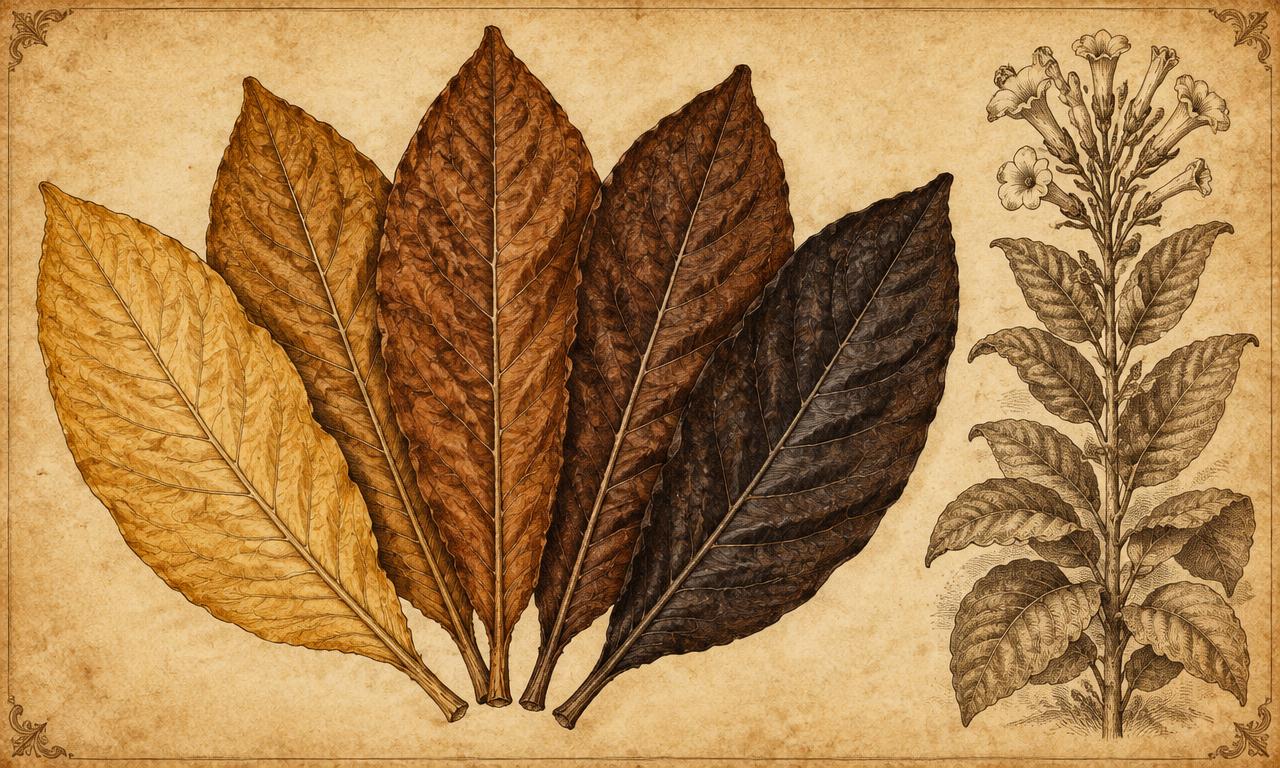 Plate 04
No. 04
Read the wrapper
Why: The wrapper is a shortcut to what a cigar might taste like.
- 1Light (Connecticut): creamy, smooth, often mild.
- 2Medium (Habano, Corojo): spice and wood.
- 3Dark (Maduro): naturally sweeter — cocoa, coffee, raisin.
- 4Very dark (Oscuro): rich and earthy.
 Plate 05
No. 05
Buy at a shop
Why: A walk-in humidor keeps cigars in perfect shape and the staff can steer you well.
- 1Close the humidor door behind you.
- 2Gently squeeze — it should feel firm with a little give, never mushy or crunchy.
- 3Smell the foot and check the wrapper for cracks.
- 4Ask before touching cigars that aren't yours to buy.
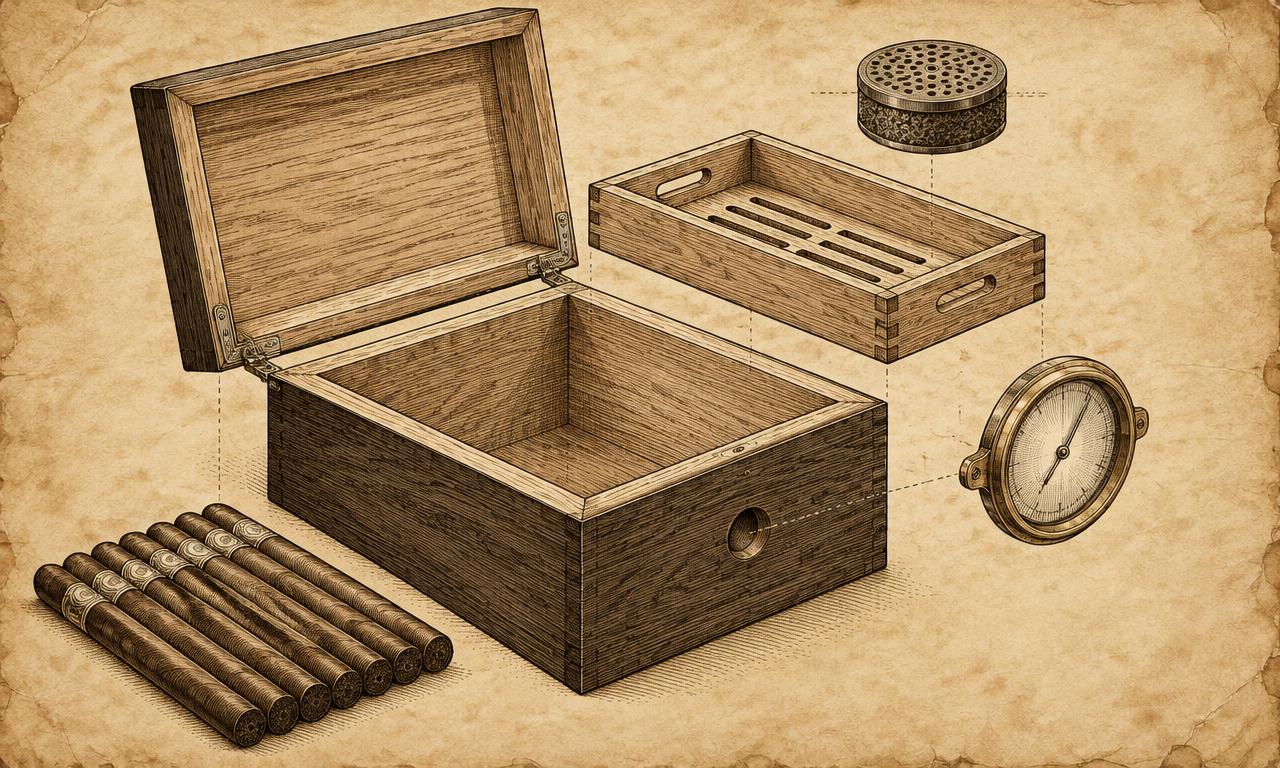 Plate 06
No. 06
Set up a home humidor
Why: Cigars dry out in normal air within days. A humidor keeps them fresh for years.
- 1Pick a size bigger than you think — collections grow.
- 2Look for a tight-closing lid and Spanish cedar lining.
- 3Add a humidifier (a two-way humidity pack is easiest).
- 4Add a hygrometer so you can see the humidity.
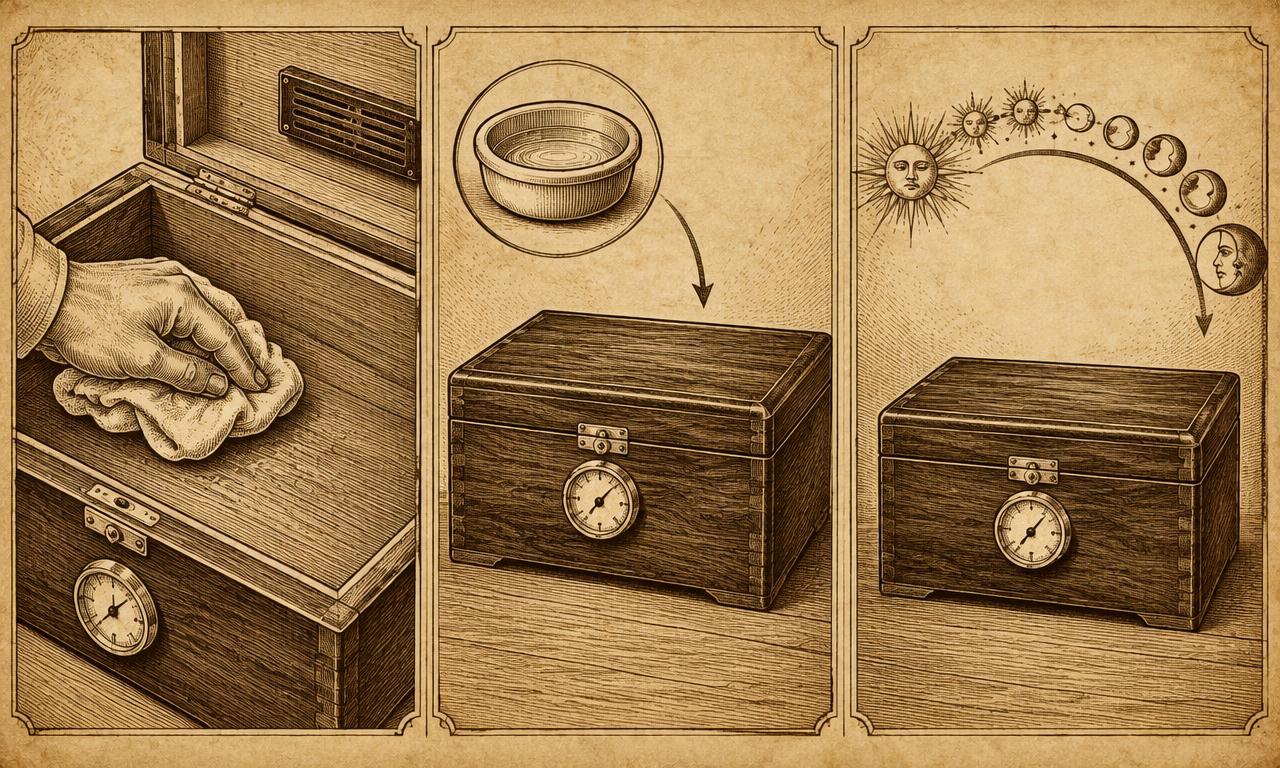 Plate 07
No. 07
Season a new humidor
Why: Dry cedar soaks moisture out of your cigars. Seasoning fills the wood first.
- 1Wipe the cedar lightly with a cloth dampened with distilled water.
- 2Place a small dish of distilled water or humidity packs inside and close it.
- 3Wait 3–7 days, until humidity holds steady.
- 4Then add your cigars.
Never use tap water — minerals cause mold and odors.
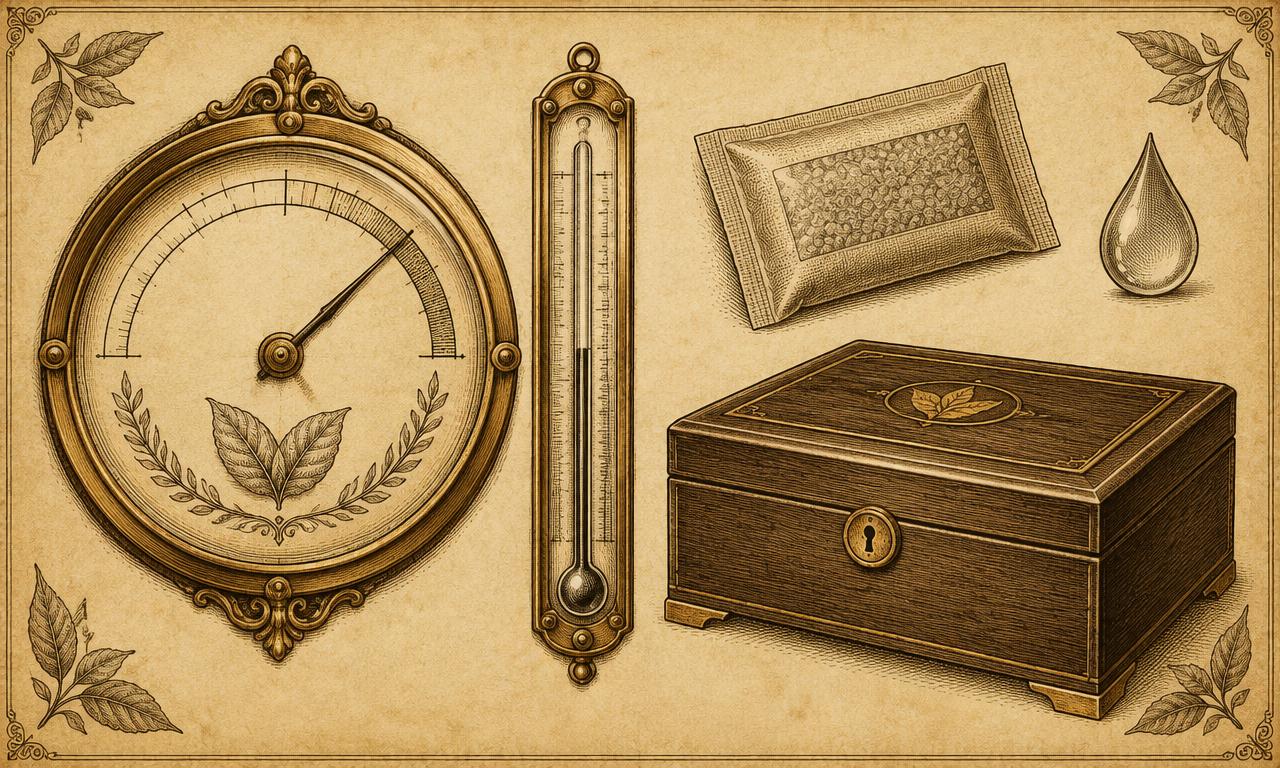 Plate 08
No. 08
Keep humidity and temperature right
Why: Too wet and cigars won't burn (or grow mold); too dry and they crack.
- 1Aim for 65–70% humidity.
- 2Keep temperature around 65–70°F (18–21°C).
- 3Keep the humidor out of direct sun and away from heaters.
- 4Check the hygrometer weekly; replace humidity packs when they go hard.
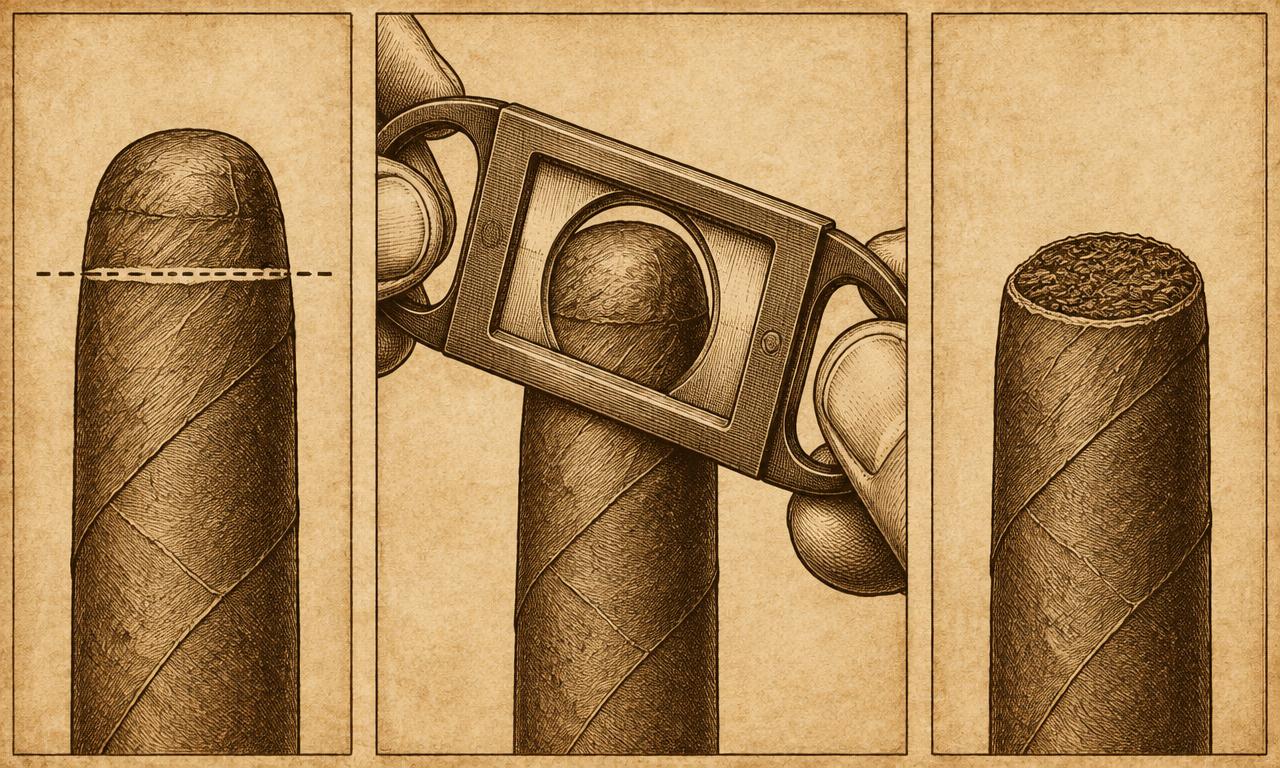 Plate 09
No. 09
Cut a cigar
Why: The cap seals the cigar. Cut too little and it won't draw; cut too much and the wrapper unravels.
- 1Find the shoulder — where the rounded cap meets the straight body.
- 2Place the cutter just above that line, about 1/16 inch in.
- 3Cut in one quick, firm motion.
- 4Test the draw: air should flow easily without being loose.
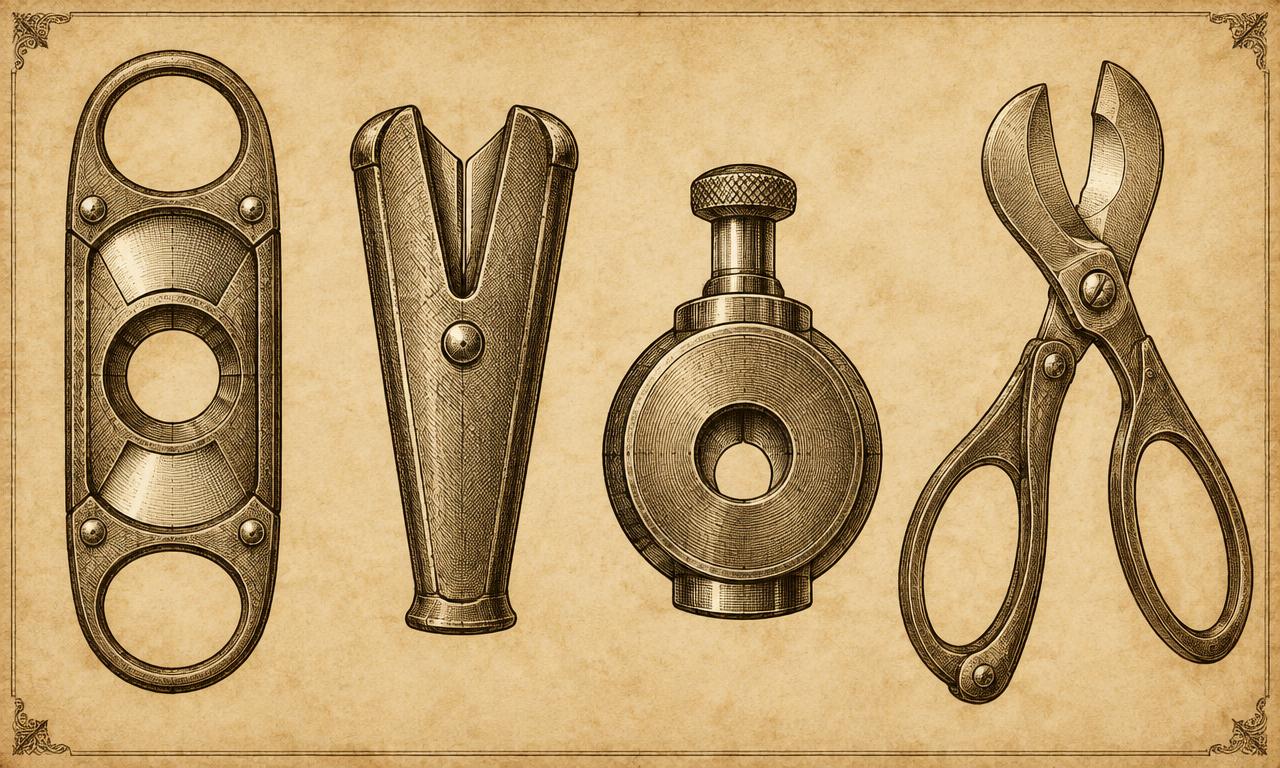 Plate 10
No. 10
Pick a cutter
Why: Each cut shapes the smoke differently.
- 1Straight (guillotine): the all-purpose choice.
- 2V-cut: a wedge that concentrates the smoke.
- 3Punch: a small round hole — great for thick cigars.
- 4Scissors: classic and precise once you have practice.
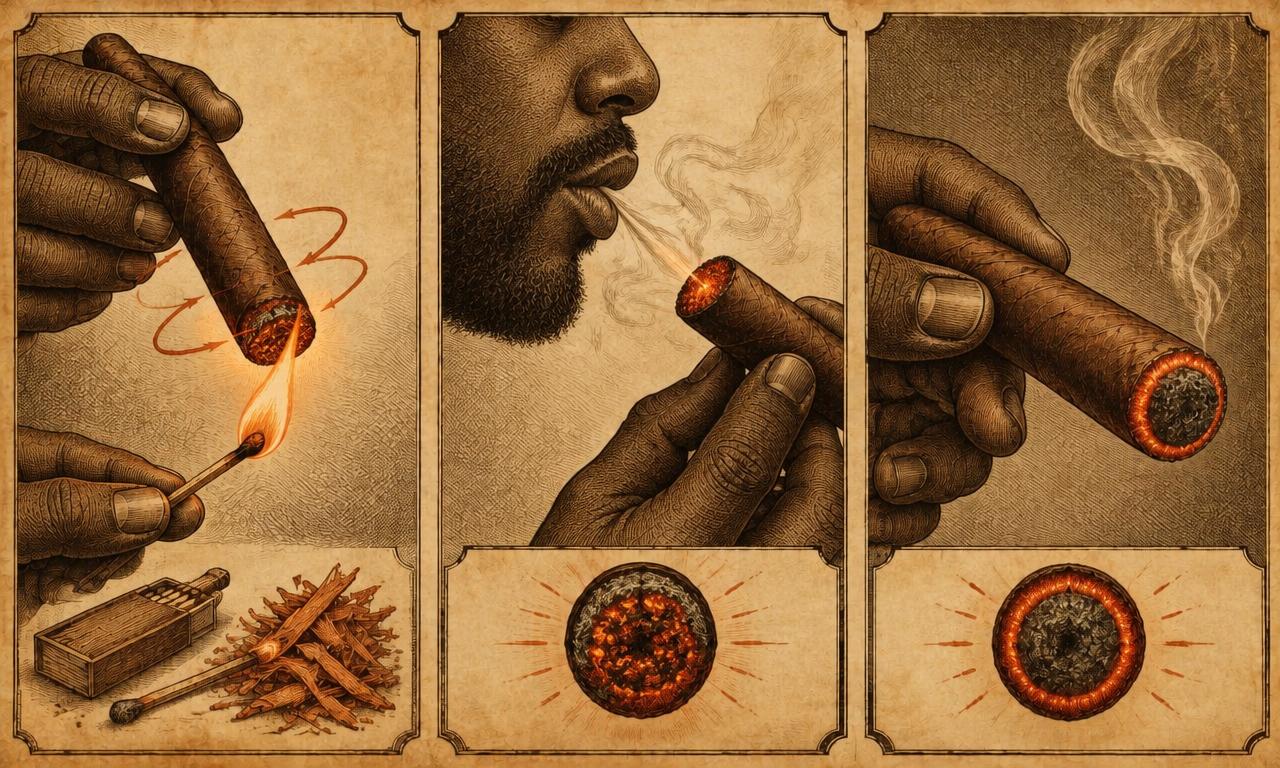 Plate 11
No. 11
Toast and light it
Why: An even light means an even burn and better flavor all the way down.
- 1Hold the foot just above the flame, not in it.
- 2Rotate slowly until the edge glows evenly (toasting).
- 3Then draw gently while rotating to finish lighting.
- 4Blow lightly on the foot to check for an even glowing ring.
Use butane, wooden matches or cedar — avoid gas-station lighter fluid.
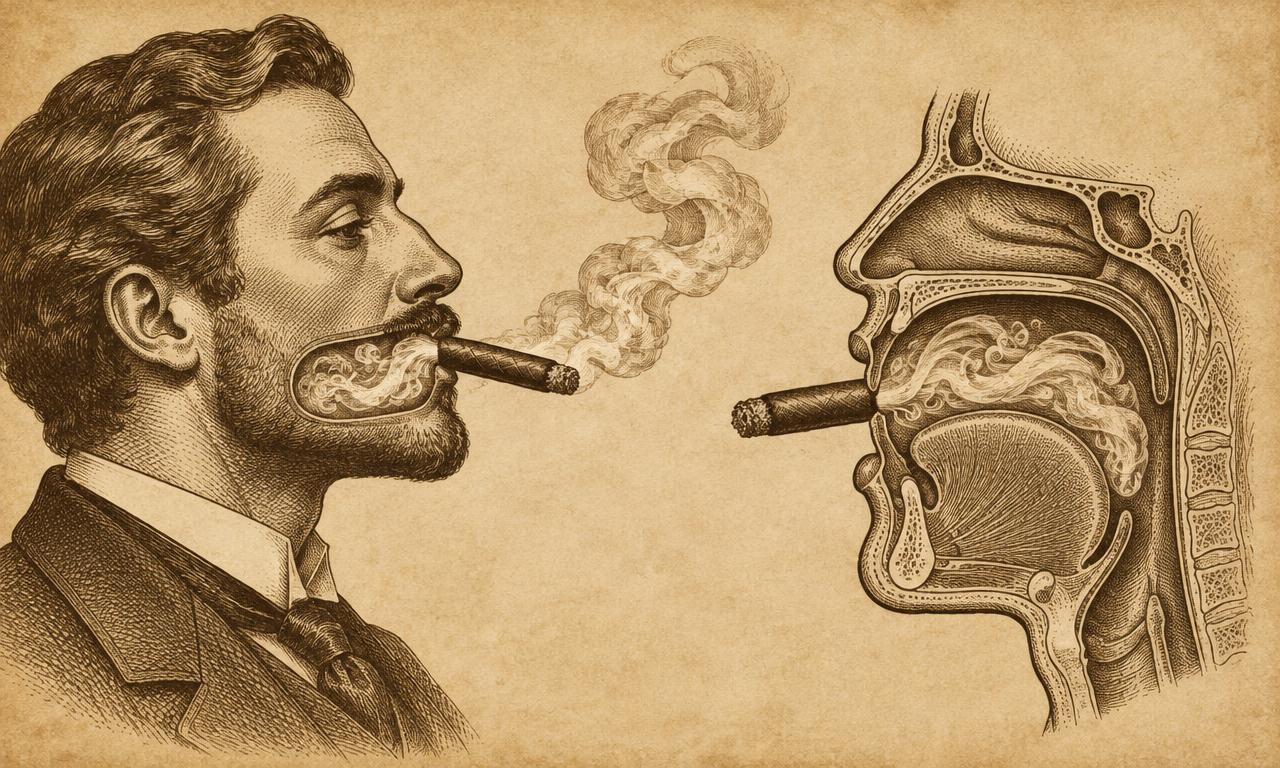 Plate 12
No. 12
Draw — don't inhale
Why: Cigar flavor lives on the tongue and in the nose, not the lungs.
- 1Take a gentle pull, like sipping through a straw.
- 2Let the smoke sit in your mouth for a moment.
- 3Release it slowly.
- 4Try pushing a little smoke out through your nose (retrohale) to taste more.
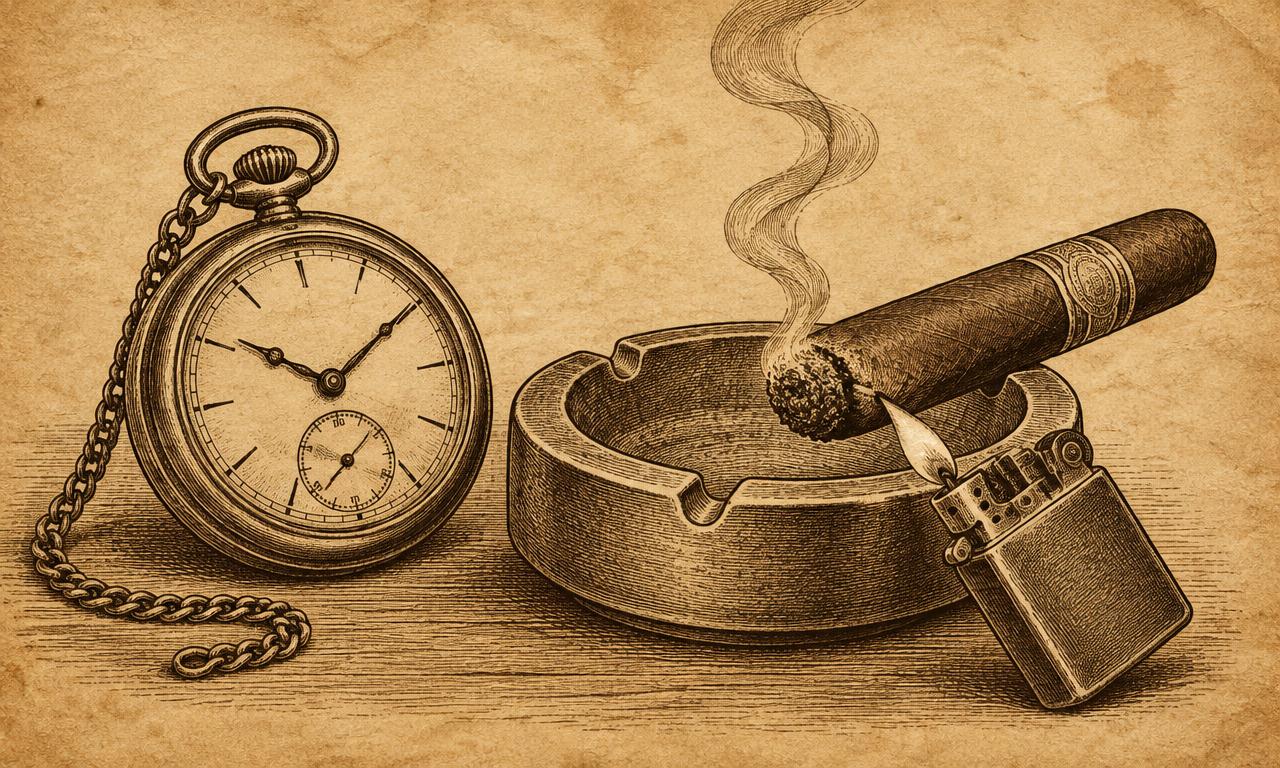 Plate 13
No. 13
Set your pace and fix the burn
Why: Puffing too fast makes a cigar hot and bitter.
- 1Aim for a puff about once a minute.
- 2If one side burns faster, touch the slow side briefly with your flame.
- 3If it goes out, knock off the ash and relight — totally normal.
- 4Rest it in the ashtray between puffs; don't hold it upright.
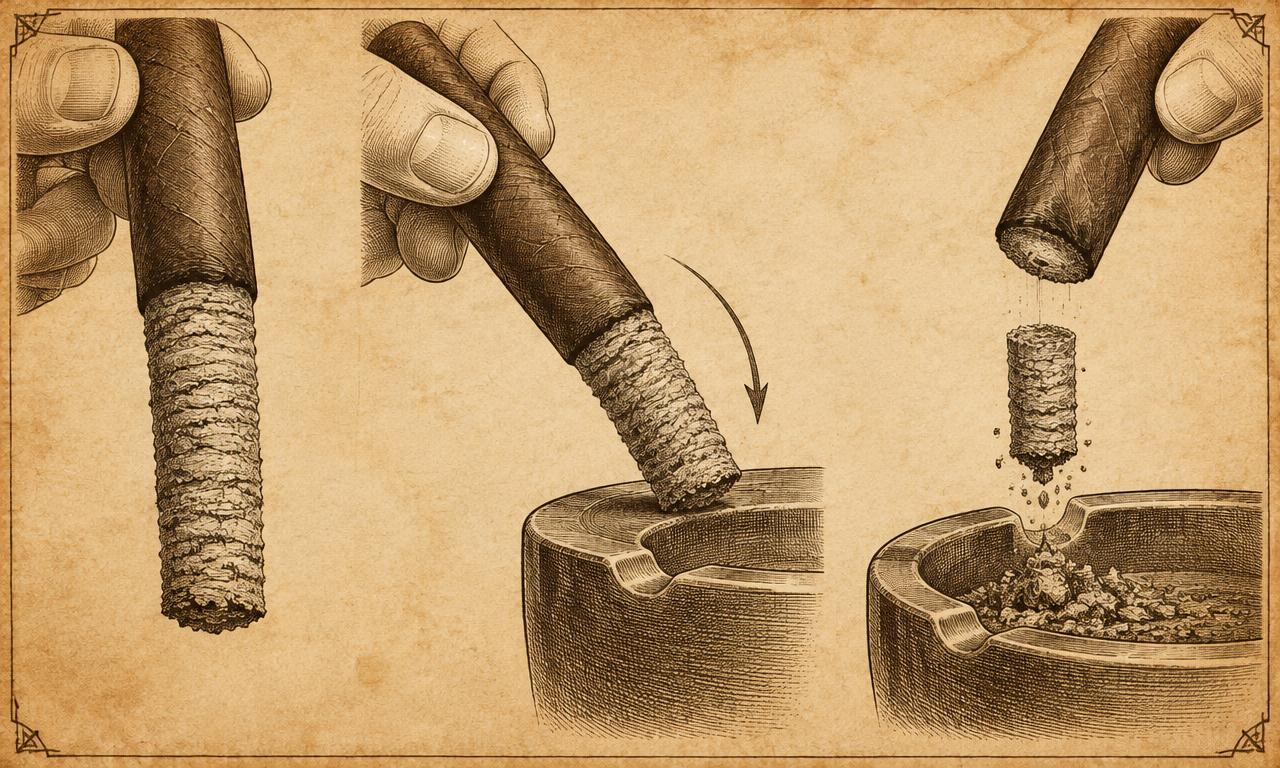 Plate 14
No. 14
Handle the ash
Why: A long ash helps the cigar burn cooler — and flicking it is a rookie move.
- 1Let the ash grow an inch or so.
- 2Gently roll or touch the cigar against the ashtray edge.
- 3Let the ash fall off on its own.
- 4Don't tap or flick like a cigarette.
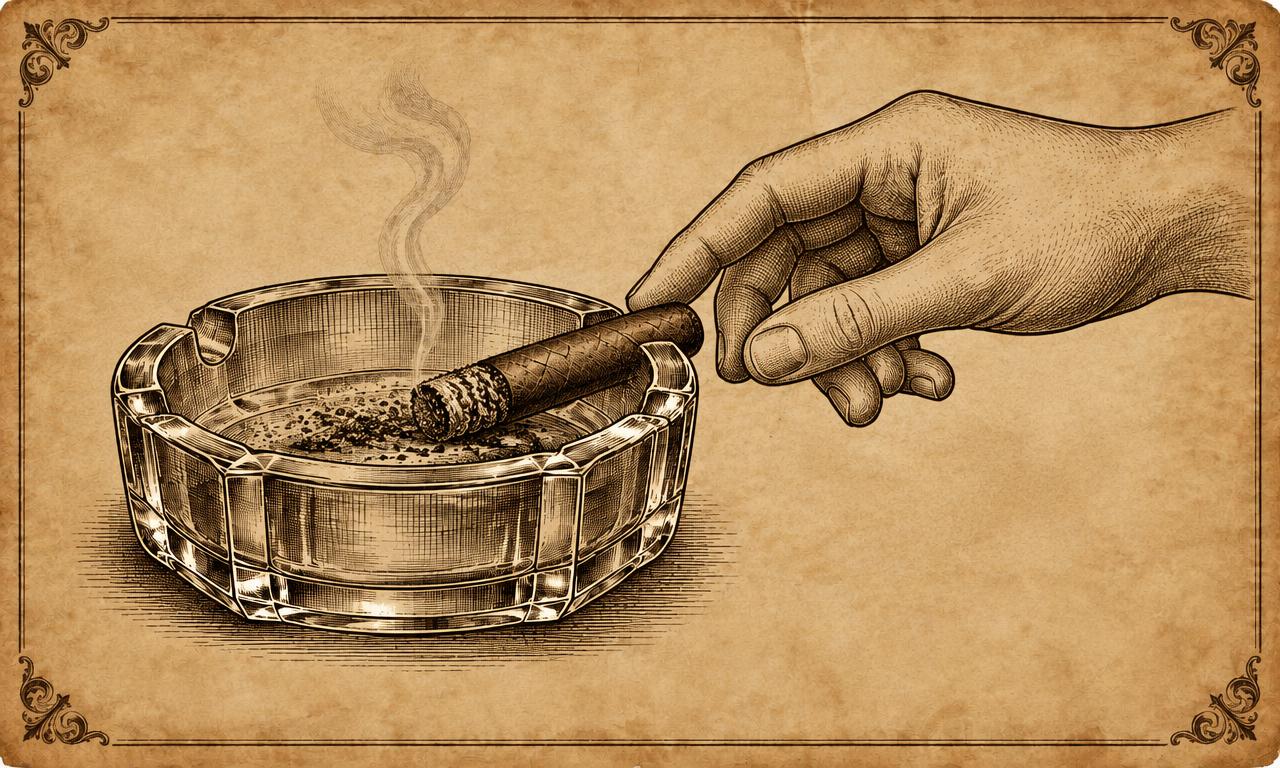 Plate 15
No. 15
Put it down properly
Why: Cigars go out by themselves — and stubbing one out makes the room smell.
- 1When it turns bitter or hot, you're done (often the last third).
- 2Set it in the ashtray.
- 3Let it go out on its own in a minute or two.
- 4Never crush or grind it out.
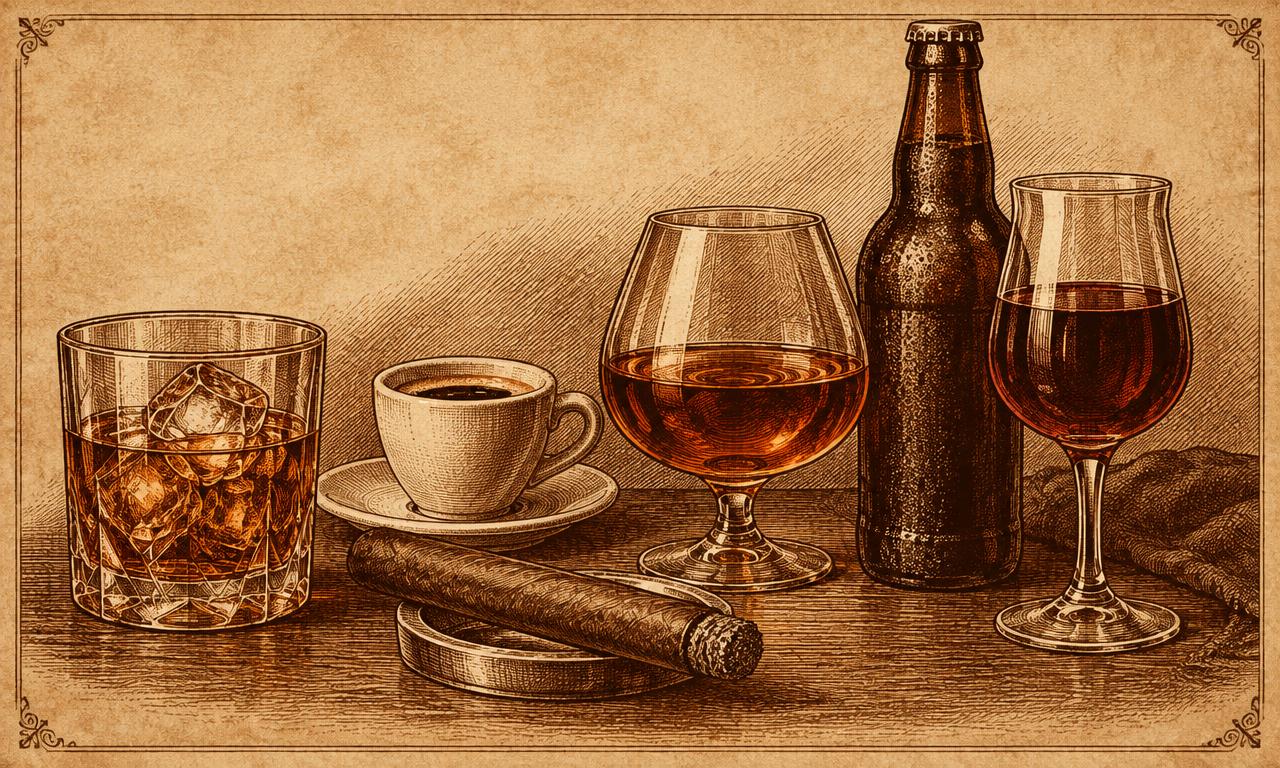 Plate 16
No. 16
Pair it with a drink
Why: The right drink brings out flavors you'd miss otherwise.
- 1Mild cigars: coffee, light beer, white wine.
- 2Medium cigars: bourbon, rum, amber beer.
- 3Full cigars: port, peated scotch, stout, espresso.
- 4Water between sips keeps your palate fresh.
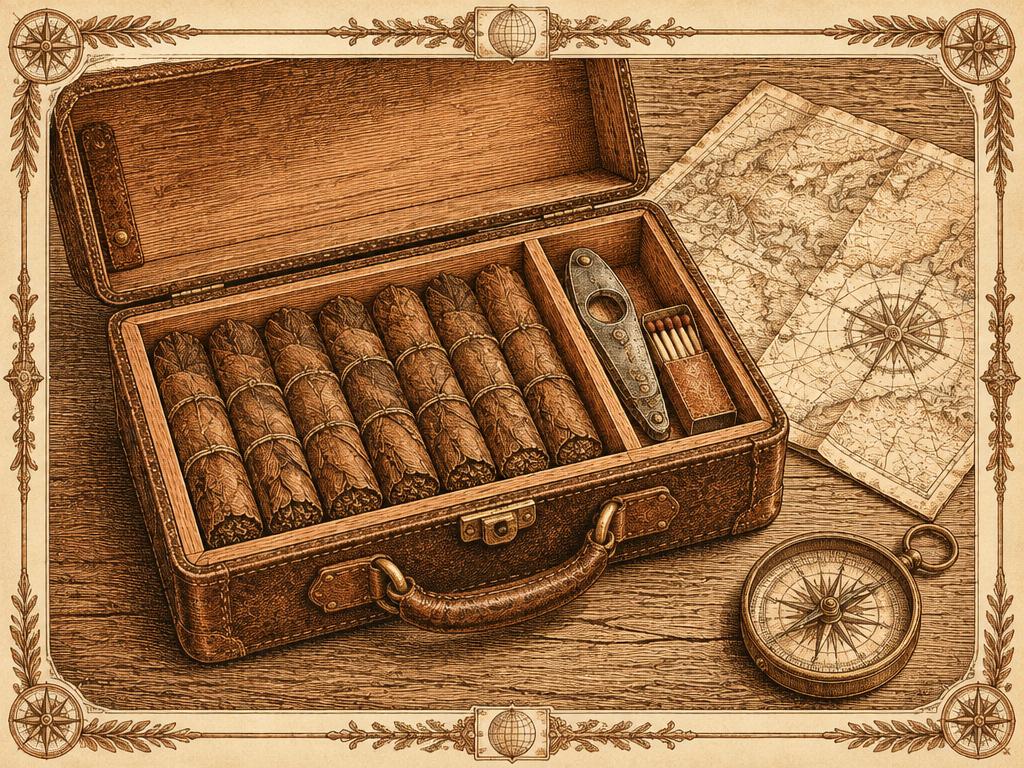 Plate 17
No. 17
Travel with cigars
Why: Conferences mean travel — and hotel rooms are bone dry.
- 1Use a hard travel case or a small travel humidor.
- 2Add a humidity pack for trips longer than a day.
- 3Keep cigars in your carry-on.
- 4Check local smoking laws and lounge hours before you go.
 Plate 18
No. 18
Lounge etiquette
Why: Lounges are shared spaces — and the best place to meet people.
- 1Buy something from the shop if you bring your own cigars (or ask about a cut fee).
- 2Say hello; most people in a lounge love to talk.
- 3Offer a cigar if you're celebrating, never expect one.
- 4Relationships first: business talk is welcome, hard pitches aren't.
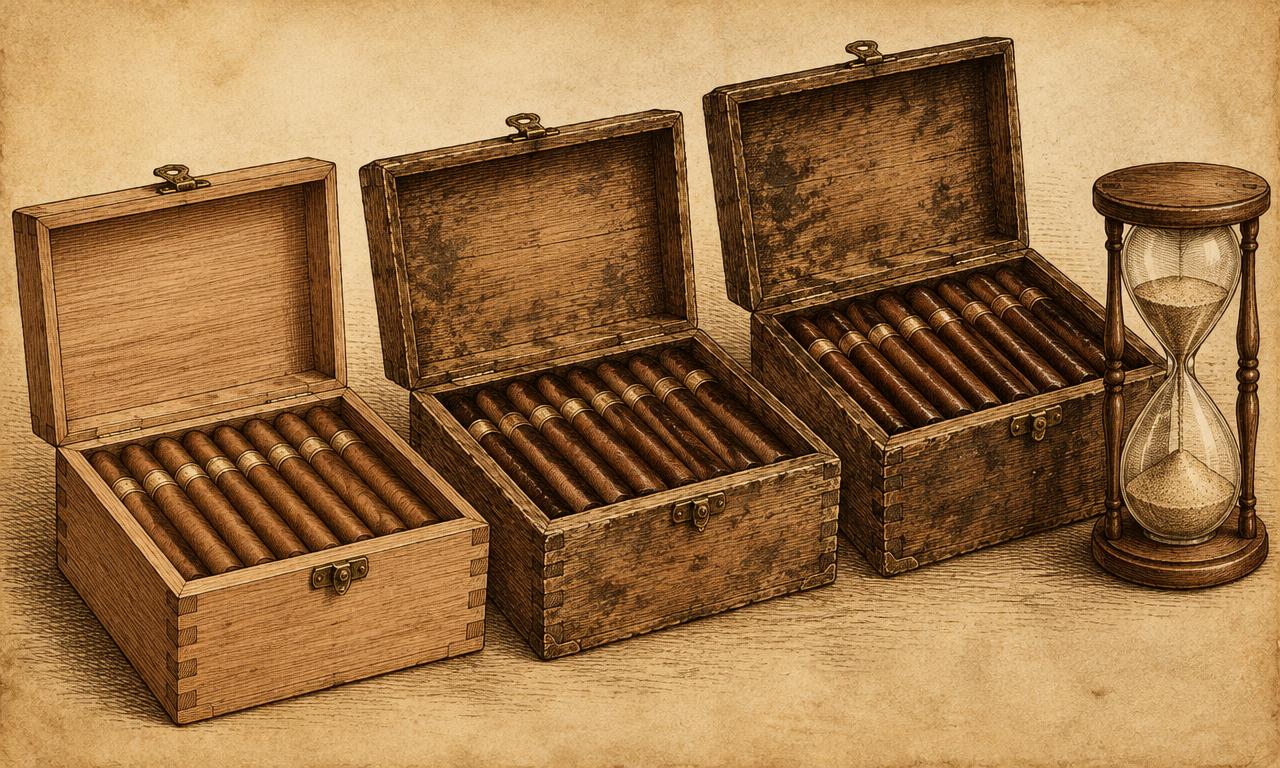 Plate 19
No. 19
Store and age cigars
Why: Many cigars get smoother and richer with time.
- 1Keep cigars in their cellophane or remove it — just be consistent.
- 2Rotate cigars every few months for even humidity.
- 3Label boxes with the date you bought them.
- 4Try one now and one in a year to taste the difference.
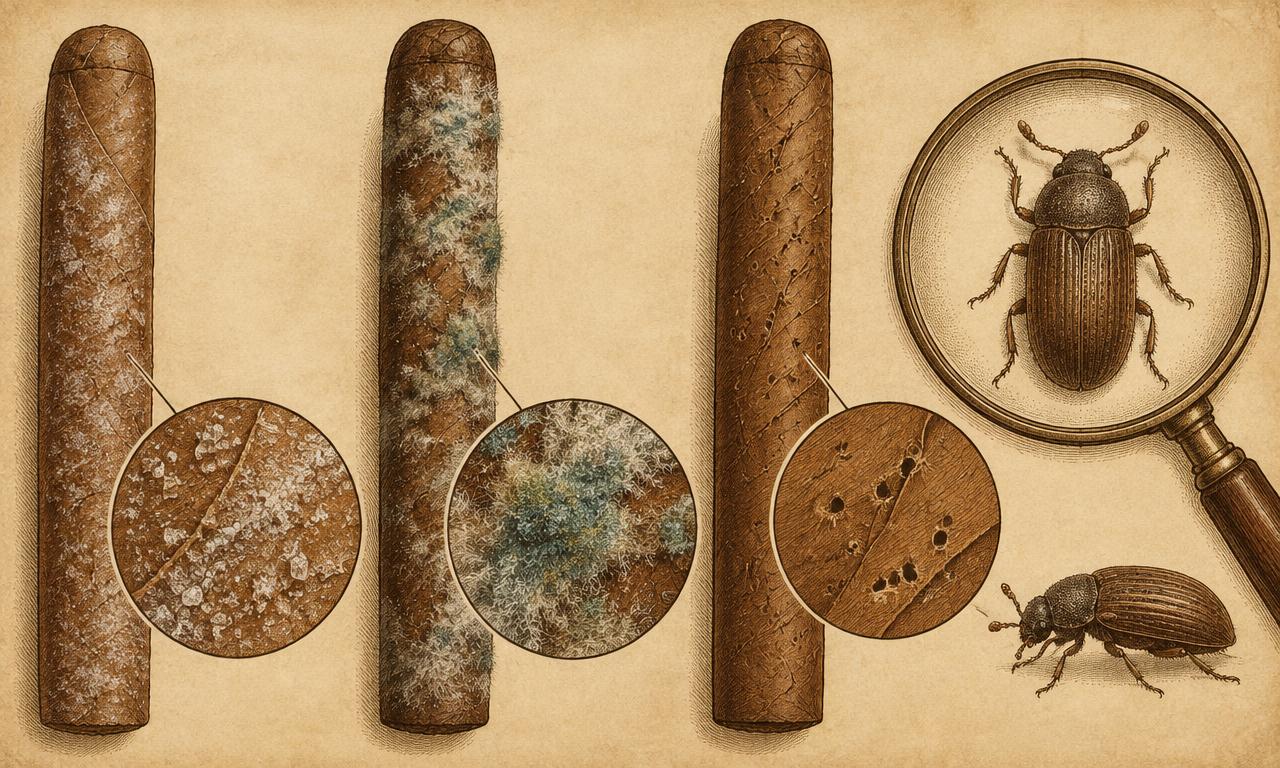 Plate 20
No. 20
Spot problems early
Why: Catching mold or beetles early saves your whole collection.
- 1Fine white powder that brushes off (plume) is harmless.
- 2Fuzzy blue-green spots are mold — remove that cigar and lower humidity.
- 3Tiny pinholes mean tobacco beetles — freeze affected cigars for 3 days.
- 4Keep temperature below 70°F to prevent beetles.